Guides
What Is Virtual Medical Simulation? A Guide for African Health Institutions
· 6 min read · Davak Medical VR
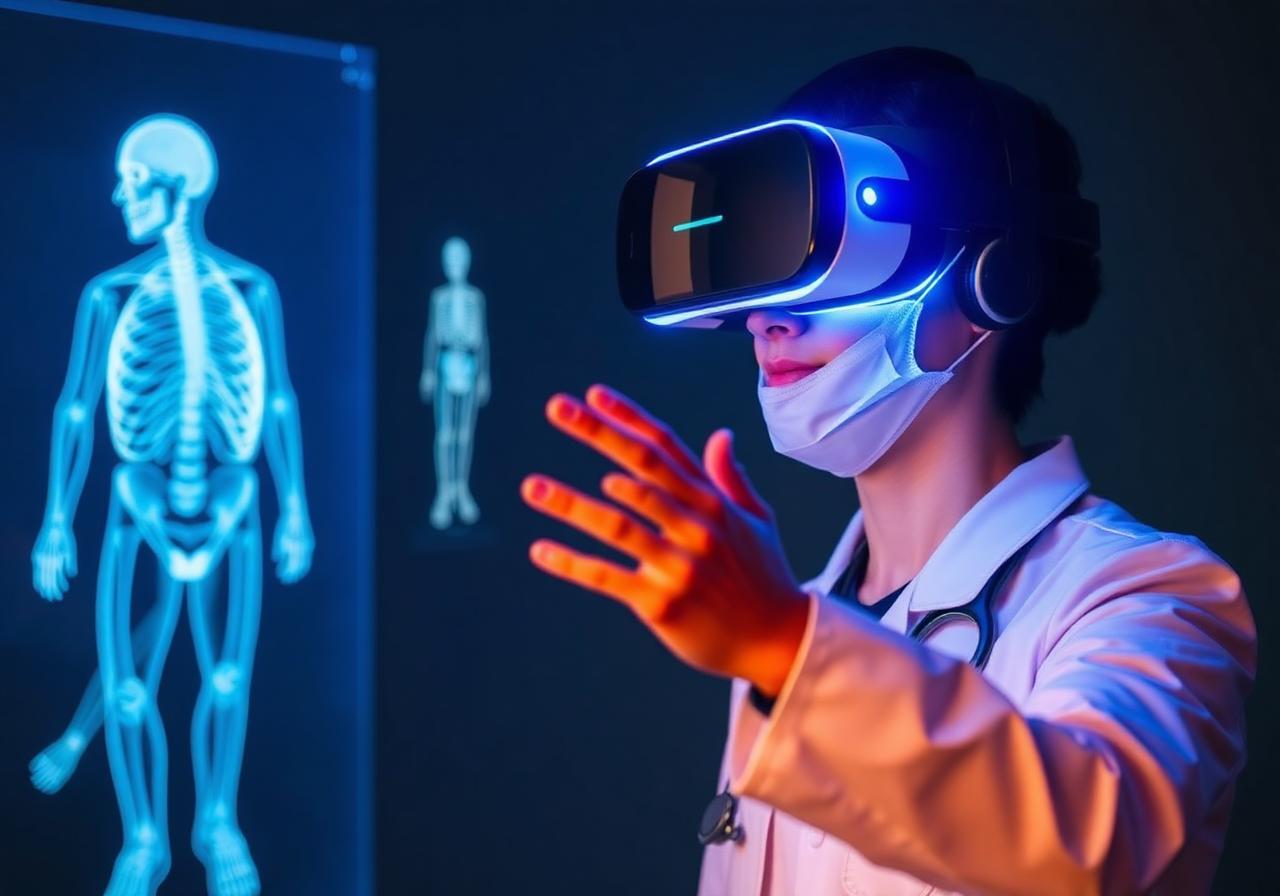
Virtual medical simulation is the use of software to recreate clinical situations, so that students can practise a skill before they perform it on a patient. The student wears a virtual reality headset, or uses a computer, and works inside a three-dimensional clinic: a patient to position, equipment to operate, decisions to make.
It belongs to the same family as the mannequin and the skills lab. The difference is that nothing physical is used up, the scenario can be repeated without limit, and everything the student does can be recorded.
How it differs from a traditional skills lab
A skills lab is a room. It holds a fixed number of students, it needs equipment that must be bought and maintained, and it needs a technician and a timetable. When the session ends, the practice ends.
A virtual simulation is closer to a textbook that can be practised. Each student has their own copy. They can use it in class with an instructor, or alone in the evening. Thirty students can practise the same procedure at the same moment.
- Capacity: one lab serves a few students at a time; software serves a whole cohort at once
- Repetition: consumables limit attempts in a lab; a virtual scenario resets in a second
- Risk: no radiation, no sharps, no patient involved
- Evidence: every attempt is recorded for the instructor to review
What it is good at, and what it is not
Simulation is strongest for procedures with clear steps and clear right and wrong: positioning a patient for an X-ray, choosing exposure factors, following an emergency protocol, identifying anatomical structures. It is also strong for events students rarely meet on placement, such as a seizure or a patient in respiratory distress.
It does not replace clinical placement. Talking to a frightened patient, working in a real team and coping with a busy ward are learned on the ward. The sensible view is that simulation makes placement time more valuable, because students arrive already knowing the procedure.
What an institution needs to run it
Less than most people expect.
- Headsets: modern standalone headsets need no cables and no connected computer
- Or computers: a desktop version lets students practise without a headset
- Internet: needed to sync results, but good systems allow practice offline
- A person responsible: one lecturer who sets the tasks and reviews the results
Where it fits in the curriculum
The most successful institutions do not treat simulation as an extra. They attach it to an existing course: a radiography positioning module, a nursing emergencies module, first-year anatomy. The lecturer assigns a simulation as a task, the students complete it, and the results feed into continuous assessment.
Starting with one course and one cohort is enough. It shows what works locally before the institution commits to more.